 Pin it
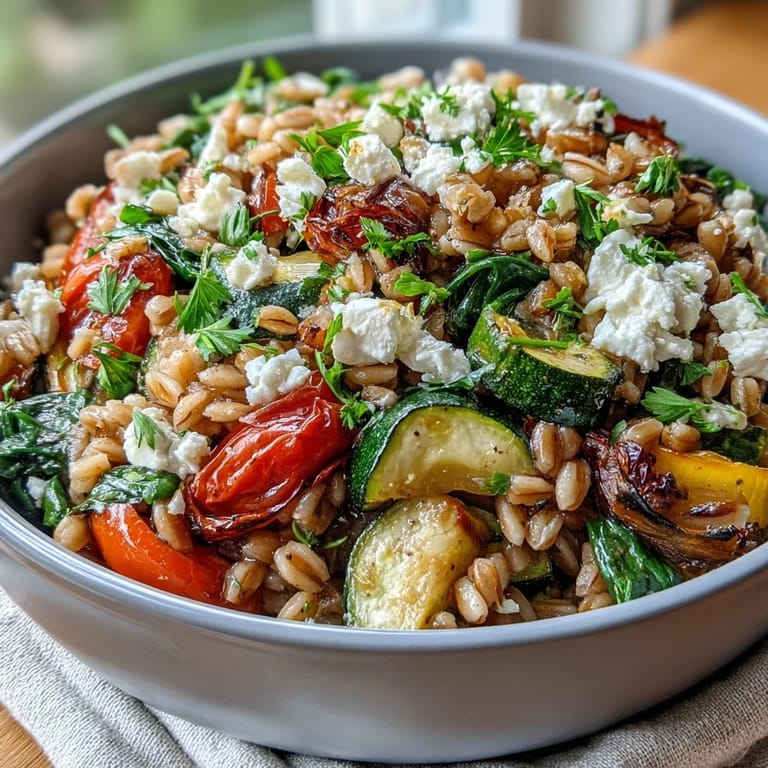
 My sister called me one Tuesday afternoon asking what to make for dinner that wouldn't leave her exhausted. I suggested this farro pasta bowl, and three days later she texted me a photo of her kitchen—bowls lined up, vegetables scattered everywhere, the smell of garlic and lemon filling the space. She'd made it four times that week. There's something about this dish that feels both effortless and deeply satisfying, like you're feeding yourself something genuinely nourishing without any fuss.
I made this for a group of friends on a warm summer evening when nobody wanted anything heavy, and what struck me was how quickly the bowls emptied. Someone asked for the recipe while still chewing, which doesn't happen often. One friend, who's notoriously particular about vegetables, went back for seconds and actually complimented the bell peppers, which felt like a minor victory worth celebrating.
Ingredients
- Farro pasta (250 g): The star ingredient that gives this dish its distinctive nutty character and chewy texture; if you can't find the pasta form, whole farro berries work beautifully too, though they take the same cooking time.
- Zucchini (1 medium, diced): Choose one that feels firm and unblemished, as softer ones tend to turn mushy when sautéed.
- Red and yellow bell peppers (1 of each, diced): The color contrast isn't just for looks—each color brings its own subtle flavor note, from sweet to slightly tangy.
- Cherry tomatoes (150 g, halved): Their natural sweetness balances the earthiness of the farro, and halving them rather than leaving them whole means they release more juice into the pasta.
- Baby spinach (100 g): Add this at the very end so it wilts gently without becoming bitter; fresh spinach tastes completely different from cooked-to-death spinach.
- Red onion (1 small, finely sliced): Raw red onion brings a sharp, crisp edge that cuts through the richness of the oil and cheese beautifully.
- Garlic (2 cloves, minced): Fresh garlic is non-negotiable here; jarred garlic simply won't deliver the same aromatic punch that makes your kitchen smell incredible.
- Extra virgin olive oil (60 ml plus 2 tbsp for sautéing): This is where quality truly matters—a good olive oil transforms the dressing from adequate to genuinely memorable.
- Lemon juice (2 tbsp, freshly squeezed): Fresh lemon juice tastes alive compared to bottled, and it's the acidity that ties everything together.
- Dried oregano (1 tsp): Mediterranean oregano carries this dish's flavor profile, though you can substitute with dried basil if that's what you have.
- Sea salt and black pepper: Taste as you go—salt levels vary depending on how salty your pasta water was and what brand of feta you use.
- Feta cheese (60 g, crumbled): The crumbles should be irregular and chunky, not powdered, so they provide little pockets of salty richness throughout.
- Fresh parsley and toasted pine nuts (optional): Both add texture and brightness, though the dish stands perfectly well without them if you're keeping things simple.
Tired of Takeout? 🥡
Get 10 meals you can make faster than delivery arrives. Seriously.
One email. No spam. Unsubscribe anytime.
Instructions
- Set your water to boil:
- Fill a large pot about three-quarters full with water, add a generous handful of salt (it should taste like the sea), and bring it to a rolling boil before adding the pasta. This is your only opportunity to flavor the farro itself, so don't skip the salt.
- Cook the farro pasta:
- Once the water is truly boiling, add the farro pasta and stir immediately to prevent sticking. Cook according to package directions, usually around 12-15 minutes, until it's tender but still has a slight resistance when you bite into it—that's al dente, and it's the difference between a good dish and a mushy one.
- Start the vegetables while pasta cooks:
- Heat 2 tablespoons of olive oil in a large skillet over medium heat and add the sliced onion and minced garlic. The kitchen will smell incredible within about 30 seconds, and when the garlic turns pale golden, you'll know you're ready for the next step.
- Build the vegetable mixture:
- Add the diced zucchini, both bell peppers, and the halved cherry tomatoes to the skillet. Sauté everything for 6-8 minutes, stirring occasionally, until the vegetables have softened at the edges but still hold their bright color and slight firmness.
- Finish with spinach:
- Scatter the baby spinach over the warm vegetables and stir gently until just wilted, which takes about 1-2 minutes. The residual heat is enough to cook it without turning it dark and bitter.
- Make your dressing:
- In a small bowl, whisk together the remaining olive oil, fresh lemon juice, dried oregano, salt, and pepper. Taste it on a spoon before you commit—you want it bright and lemony with that oregano warmth coming through, and salty enough to be interesting.
- Bring everything together:
- Drain your farro pasta and add it to the bowl of sautéed vegetables. Pour the dressing over everything and toss gently but thoroughly, making sure the oil coats every piece. This is the moment where everything stops being separate components and becomes one cohesive dish.
- Serve and garnish:
- Divide the pasta mixture among serving bowls and top each one with crumbled feta, fresh parsley, and toasted pine nuts if you're using them. Serve it warm right away, or let it cool to room temperature—both ways are equally delicious.
 Pin it
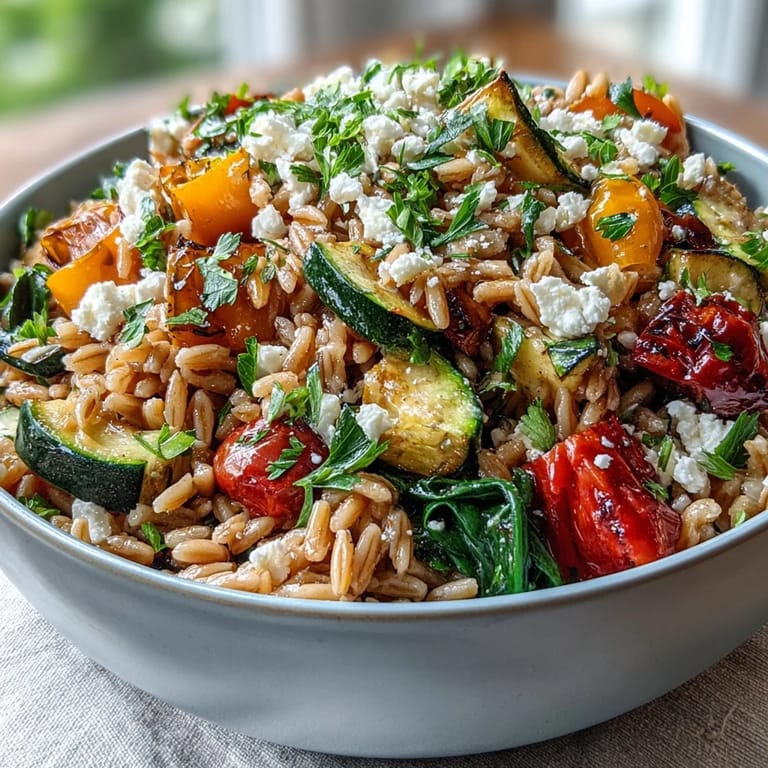
 I've noticed this bowl has become the dish I make when I want to feel like I'm taking care of myself, which is different from cooking just to eat. There's something about these bright vegetables and nutty grains that feels like an actual conversation happening on the plate.
Why Farro Changes Everything
Most people default to regular pasta in situations like this, and there's nothing wrong with that. But farro is different—it has a texture that's almost creamy when cooked properly, and a subtle nuttiness that elevates even the simplest vegetables. I discovered this completely by accident when I grabbed the wrong box at the market, and now I can't imagine this bowl any other way. The farro also holds up better to the olive oil dressing without absorbing it into oblivion, which means your dressing stays dressing rather than disappearing.
Temperature and Timing Considerations
This is one of those rare dishes that's genuinely delicious at multiple temperatures, which makes it incredibly practical. Serve it immediately while everything's still warm and the feta's slightly soft, or let it cool to room temperature for a more salad-like experience. Some people even eat it cold straight from the fridge the next day, and while I prefer it room temperature, the point is that you have flexibility here. The flavors actually deepen slightly as it sits, so if you're making this ahead for a meal-prep situation, you're actually doing yourself a favor.
Making It Your Own
The skeleton of this recipe is solid, but the vegetables can shift based on what's looking good at your market or what you already have taking up space in your fridge. I've made versions with roasted eggplant, diced cucumbers, sun-dried tomatoes, and sliced artichoke hearts. The key is keeping the ratio roughly the same—about four cups of vegetables to one pound of farro pasta—and maintaining that balance of cooked and raw elements. You can also layer in proteins easily: white beans, chickpeas, grilled chicken, or even a poached egg all feel right at home in this bowl.
- Roasted vegetables like eggplant or mushrooms add a deeper, earthier flavor if you want something more substantial.
- A handful of fresh herbs like mint or dill stirred in at the end brings unexpected brightness.
- If you want more protein without changing the character of the dish, toasted chickpeas or white beans integrate seamlessly.
 Pin it
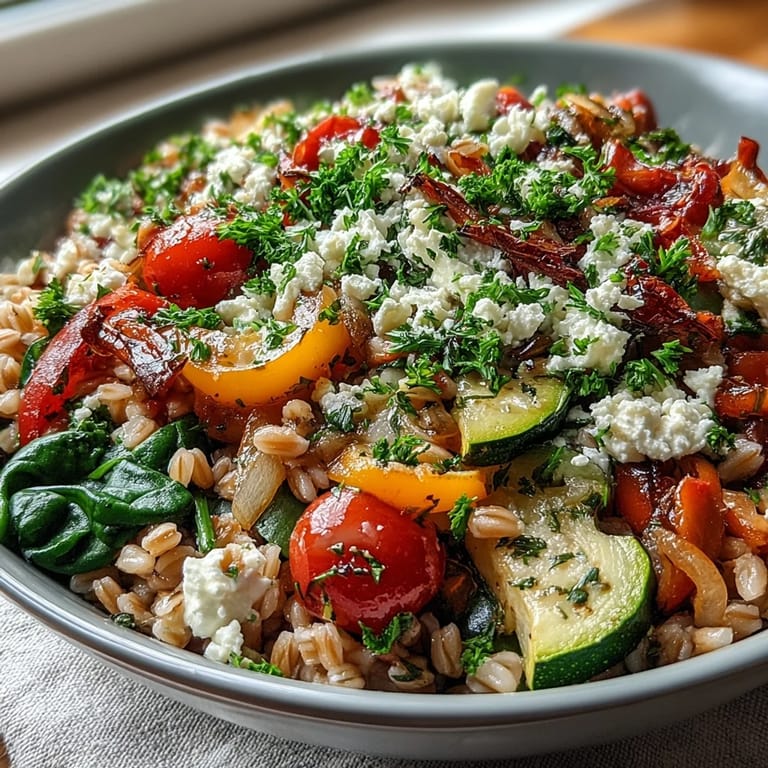
 This farro pasta bowl has quietly become the recipe I return to when I want something nourishing without any pretense, something that tastes as good as it makes me feel. Every element earns its place on the plate.
Recipe FAQs
- → Can I use regular farro instead of farro pasta?
Yes, you can substitute whole farro grains for farro pasta. Cook the whole farro for approximately 20-25 minutes until tender, then drain and proceed with the remaining steps as directed.
- → Is this dish suitable for meal prep?
Absolutely. This farro pasta bowl keeps well in the refrigerator for 3-4 days and can be served cold as a salad. The flavors actually develop and improve after sitting for a few hours.
- → How can I add more protein to this bowl?
You can add cooked chickpeas, white beans, or grilled chicken to increase protein content. For plant-based options, consider adding tofu or serving with a side of Greek yogurt.
- → What vegetables work well as substitutes?
Eggplant, artichoke hearts, cucumber, or roasted red peppers make excellent alternatives. You can also add fresh herbs like basil or mint for additional flavor depth.
- → Can I make this dish vegan?
Simply omit the feta cheese or replace it with a plant-based alternative. The toasted pine nuts can also be left out if needed, and the dish remains delicious and satisfying.