 Pin it
 My neighbor brought over a chilled soba noodle bowl one sweltering afternoon, and I remember how the sesame aroma hit me before I even lifted the chopsticks—nutty, alive, calling. She'd learned to make it during a summer trip to Tokyo, and watching her assemble it so casually, like it was nothing special, made me realize how powerful simplicity could be. That bowl became my go-to when the kitchen felt too hot to think, when I needed something that tasted like care but didn't demand hours of it.
I made this for my sister during a particularly stressful week, plating each bowl with extra care because I knew she needed something gentle and nourishing. She took one bite, closed her eyes, and just sat there for a moment—not saying anything. Later she told me it was the first meal that week where she could actually taste what she was eating instead of just mechanically eating. That's when I understood why this bowl matters so much.
Ingredients
- Dried soba noodles (250 g): Look for 100% buckwheat if you're avoiding gluten—regular soba often contains wheat flour. The noodles should snap cleanly when raw, which means they're fresh enough to have that satisfying chew.
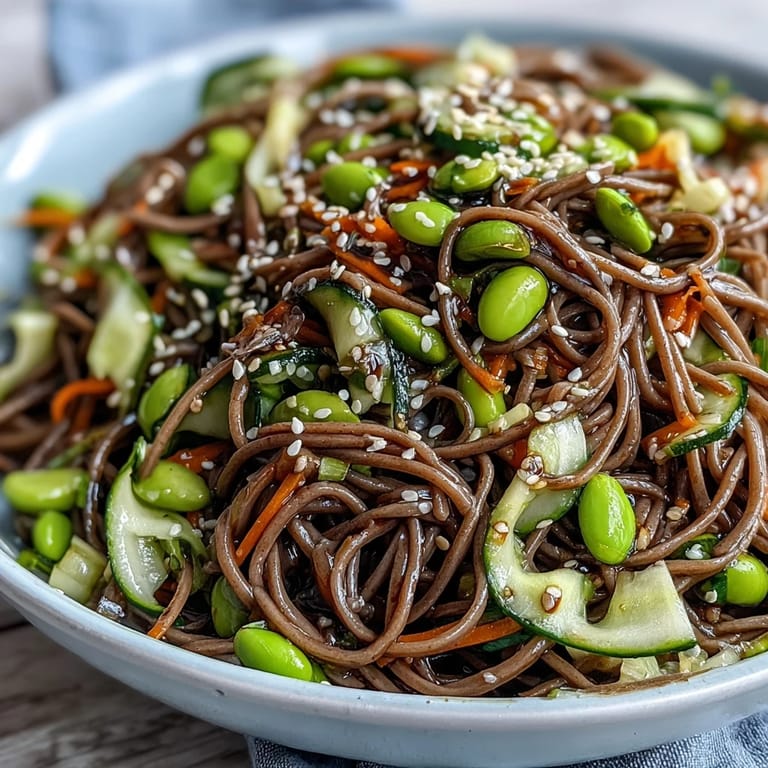
- Shelled edamame (1 cup): Frozen edamame are actually perfect here; they thaw quickly and have better texture than canned. Don't skip this—they add protein and a bright pop of color.
- Cucumber (1 medium, julienned): English cucumbers are less watery than standard varieties, so your noodles won't get soggy. Julienne thinly so they stay crisp and add delicate texture.
- Carrots (2 medium, peeled and julienned): Raw carrots provide a slight sweetness and satisfying crunch that balances the savory dressing beautifully.
- Scallions (2, thinly sliced): Use both the white and green parts—the whites add a sharper bite while the greens bring freshness and visual appeal.
- Toasted sesame seeds (2 tbsp): Toast your own if possible; the difference between pre-toasted and fresh-toasted is night and day in terms of aroma and depth.
- Fresh cilantro or mint (1/4 cup, optional): This is optional but transforms the bowl from nice to memorable—choose cilantro for earthiness or mint for brightness.
- Soy sauce (3 tbsp): Use good quality soy sauce; it's the backbone of your dressing and deserves respect.
- Rice vinegar (2 tbsp): This adds necessary acidity and keeps the dressing from feeling heavy or one-dimensional.
- Toasted sesame oil (1 tbsp): This ingredient does the heavy lifting flavor-wise, so don't skimp on quality—a little goes a long way.
- Tahini or smooth peanut butter (1 tbsp): Tahini keeps things neutral and earthy; peanut butter will shift the flavor profile noticeably, so choose based on your mood.
- Honey or maple syrup (1 tbsp): Just enough sweetness to round out the savory notes without making the dressing dessert-like.
- Fresh ginger (1 tsp, grated): Grate it just before mixing so you capture all that bright, spicy energy.
- Garlic clove (1 small, minced): One clove is all you need—garlic here should whisper, not shout.
- Water (1 tbsp, for thinning): Keep this nearby; you might need more depending on how thick your tahini is and how you like the consistency.
Tired of Takeout? 🥡
Get 10 meals you can make faster than delivery arrives. Seriously.
One email. No spam. Unsubscribe anytime.
Instructions
- Boil your noodles until they're just tender:
- Bring a medium pot of water to a rolling boil and add the soba noodles, stirring gently to separate them. They'll cook quickly—usually around 4 to 5 minutes. You want them chewy, not mushy, so taste one a minute before the package says they're done.
- Chill the noodles immediately:
- Drain them in a colander and run cold water over them until they're completely cooled, stirring gently with your fingers. This stops the cooking process and prevents sticking—it's the step that makes them tender without turning into paste.
- Get the edamame ready while the noodles cook:
- Drop frozen edamame into boiling salted water and let them cook for just 2 to 3 minutes. Drain and set aside—they should still have a little firmness to their bite.
- Build your dressing in a small bowl:
- Whisk together soy sauce, rice vinegar, sesame oil, tahini, honey, ginger, and minced garlic until it's smooth and unified. If it feels too thick, add water a teaspoon at a time until it reaches a pourable consistency that still clings to the noodles instead of pooling at the bottom of the bowl.
- Prep your vegetables with care:
- Peel and julienne the carrots into thin matchsticks, do the same with the cucumber, and slice the scallions into thin rounds. Keep everything separate for now—they'll look more intentional when you assemble.
- Dress the noodles gently:
- In a large bowl, add the cooled soba noodles and pour about half the dressing over them. Use chopsticks or two forks to toss gently until the noodles are evenly coated but not clumped together.
- Assemble each bowl like you're creating something someone will remember:
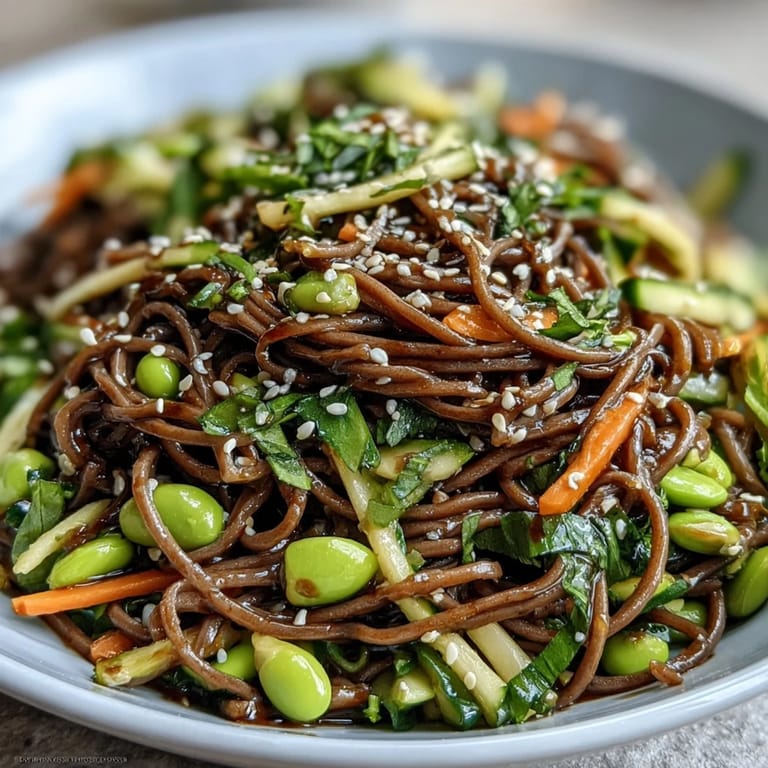
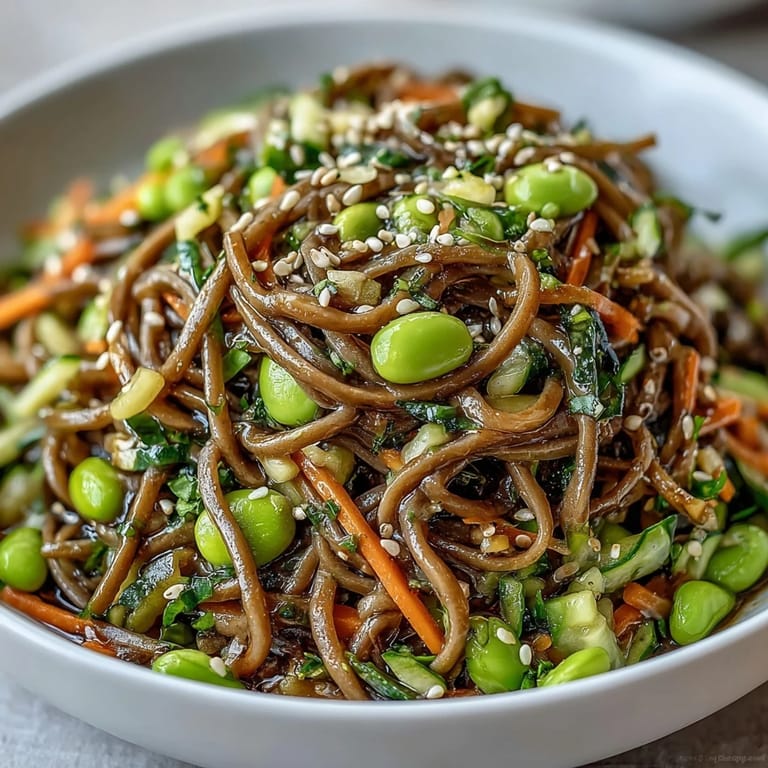
- Divide the dressed noodles among four bowls. Arrange the edamame, cucumber, and carrots on top in whatever way makes you happy—you're not plating for judges, just for people who will appreciate the care. Scatter scallions across everything, drizzle with the remaining dressing, and finish with toasted sesame seeds and herbs if you're using them.
 Pin it
 There's something about standing in your kitchen with everything prepared, seeing all those colors lined up in their little piles, that makes you feel capable. The first time I made this for guests, I worried I'd somehow mess up something so simple, but then everyone was quiet while they ate, really present with what was in front of them. That's when I realized this bowl isn't about complexity—it's about intention.
Variations That Keep It Interesting
Once you've made this once or twice, you'll start seeing how flexible it really is. Add grilled tofu if you want more protein, or a soft-boiled egg if you're in a slightly indulgent mood—both soften into the noodles in the most satisfying way. Swap out the cucumber for snap peas when they're in season, or add shredded radish if you want something peppery and sharp. The dressing is forgiving enough to work with almost any vegetable combination you can imagine.
The Sesame Dressing Secret
This dressing is honestly why people keep making this bowl. It's savory and slightly sweet, with that toasted sesame richness that makes even plain noodles taste intentional. The tahini creates a subtle creaminess without any actual dairy, while the ginger adds a quiet warmth that builds as you eat. I've made batches of it to keep in the refrigerator for salads, roasted vegetables, and moments when I need a flavor boost—it's become one of my foundation recipes that makes other cooking better.
Make It Your Own
The beauty of this bowl is that it adapts to whatever you have on hand and whatever you're in the mood for. I've made it with different herbs, swapped vegetables based on what looked good at the market, even adjusted the dressing's sweetness depending on whether I was feeling more savory or bright that day. Every version has been good because the core—the noodles, the dressing, the care you put into assembly—stays strong.
- If you're gluten-free, double-check your soba noodles are 100% buckwheat and use tamari instead of regular soy sauce.
- Make extra dressing and store it in a jar for up to five days; it's perfect on salads, grain bowls, or roasted vegetables.
- This bowl is best eaten fresh, but leftover dressed noodles can be eaten cold the next day straight from the refrigerator if you're in a hurry.
 Pin it
 This soba noodle bowl became my answer to the question of what to eat when you want something nourishing but don't have the energy for complexity. It's the kind of dish that proves you don't need fancy techniques or hard-to-find ingredients to create something memorable—just attention and care.
Recipe FAQs
- → What makes soba noodles unique?
Soba noodles are made from buckwheat flour, giving them a nutty flavor and firm, chewy texture. They're traditionally served cold or hot in Japanese cuisine and cook quickly, making them perfect for fast, nutritious meals.
- → Can I make this bowl gluten-free?
Yes. Choose 100% buckwheat soba noodles and substitute tamari for soy sauce. Some brands blend wheat with buckwheat, so always check the label to ensure the noodles are completely gluten-free.
- → How do I prevent soba noodles from sticking together?
Rinse the cooked noodles thoroughly under cold water immediately after draining. This removes excess starch and cools them down, preventing clumping. Toss with a small amount of oil or dressing if storing for later.
- → What vegetables work best in this bowl?
Cucumber, carrots, and scallions provide classic crunch and color. You can also add snap peas, bell peppers, radishes, shredded cabbage, or baby spinach for variety and extra nutrition.
- → How long does the sesame dressing last?
The dressing keeps well in an airtight container in the refrigerator for up to one week. The ingredients may separate slightly—simply whisk or shake before using again. Add fresh water if it thickens over time.
- → Can I add protein to make it more filling?
Absolutely. Grilled tofu, baked teriyaki chicken, shrimp, or soft-boiled eggs pair wonderfully. You can also increase the edamame portion or add shredded cooked chicken for extra protein.