 Pin it
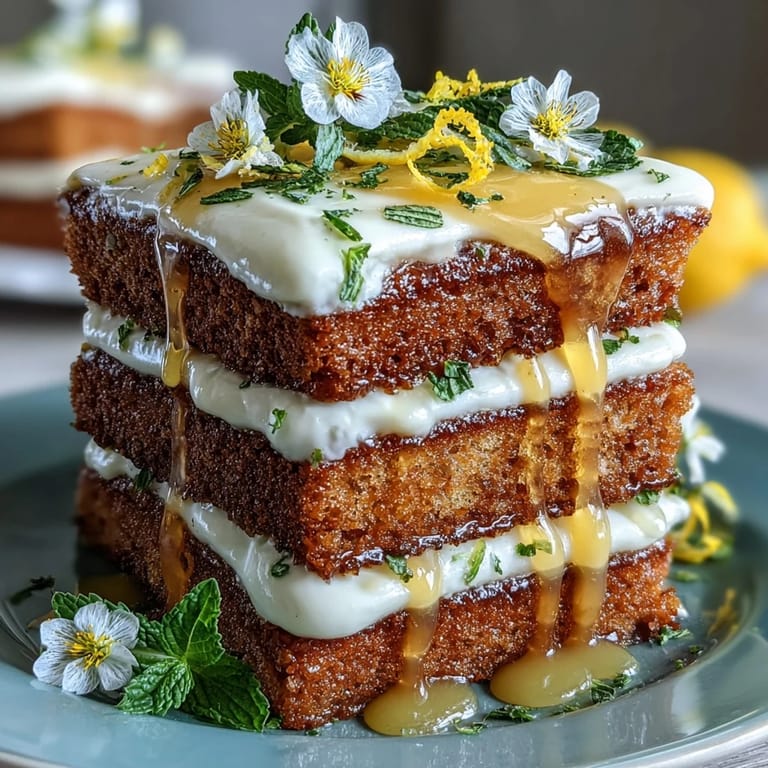
 My neighbor brought over a stunning naked cake one April afternoon, and I remember standing in her kitchen watching the afternoon light filter through those delicate edible flowers scattered across the cream. She caught me staring and laughed, saying the secret was keeping it simple—just the right balance of tangy lemon curd against pillowy whipped cream. That moment stuck with me, and I spent weeks perfecting my own version until I could recreate that exact feeling of spring elegance on a plate.
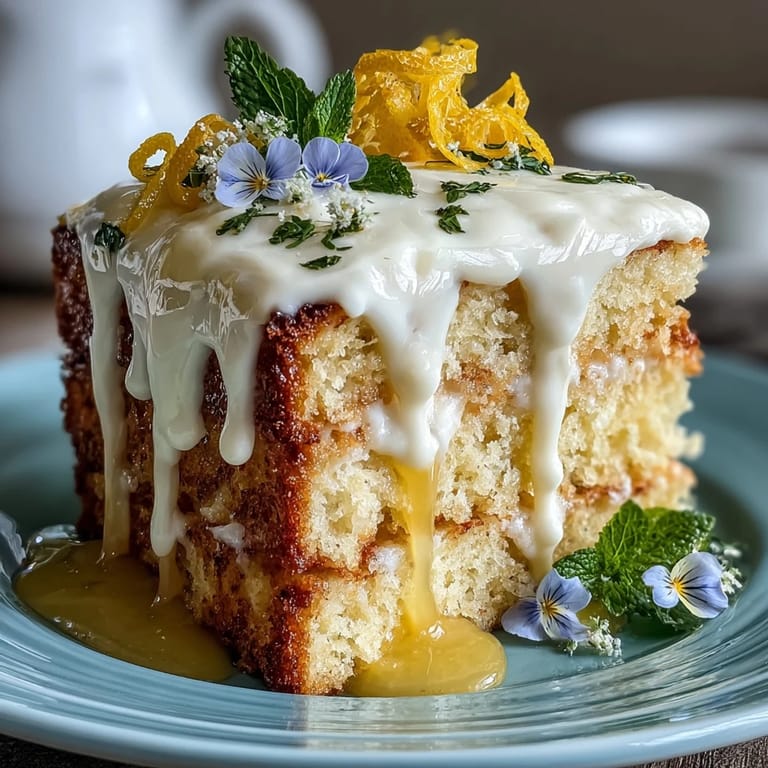
I tested this for my cousin's engagement tea, and watching her face light up when she saw the layers—the soft yellow curd peeking through, those purple violets catching the light—made all the whisking and careful assembly feel completely worth it. She actually asked for seconds, which from someone usually too full of champagne to eat dessert felt like the ultimate compliment.
Ingredients
- All-purpose flour (2 1/2 cups): The foundation of a tender crumb; make sure it's not packed down when measuring or your cake will be dense.
- Baking powder and baking soda (2 tsp and 1/2 tsp): These work together to lift the cake without making it taste metallic, so don't skip either one.
- Salt (1/2 tsp): Acts like a quiet flavor enhancer that makes the lemon and vanilla shine.
- Unsalted butter (1 cup, softened): Room temperature is non-negotiable here; cold butter won't cream properly and you'll lose that fluffy texture.
- Granulated sugar (1 3/4 cups): Creates lift and structure, so measure it straight from the bag without scooping.
- Eggs (4 large, room temperature): Cold eggs don't incorporate smoothly into the butter mixture, so pull them out at least 30 minutes ahead.
- Vanilla extract (2 tsp): Use real vanilla, not the imitation stuff, because it actually matters in a simple cake.
- Buttermilk (1 cup, room temperature): The acidity tenderizes the crumb and plays beautifully with the lemon zest.
- Lemon zest (from 1 lemon for cake, 2 for curd): Zest before juicing so you don't lose those precious oils; a microplane makes this effortless.
- Freshly squeezed lemon juice (3/4 cup): Bottled juice won't give you that bright, living flavor the curd absolutely needs.
- Egg yolks (4 for curd): Save those whites for an omelet; the yolks create that silky, custard texture.
- Heavy cream (2 cups, cold): Keep it in the fridge right up until whipping, and your peaks will hold for hours.
- Powdered sugar (1/3 cup): Dissolves instantly into cream, unlike granulated sugar which can make it grainy.
- Edible flowers (1–2 cups): Buy from a specialty grocer or farmer's market where you know they're pesticide-free; pansies and violets photograph beautifully.
Tired of Takeout? 🥡
Get 10 meals you can make faster than delivery arrives. Seriously.
One email. No spam. Unsubscribe anytime.
Instructions
- Prep your pans and preheat:
- Get your oven to 350°F and grease three 8-inch pans, then line the bottoms with parchment—this prevents sticking and makes cleanup almost pleasant. The parchment should overhang slightly so you can grab it and lift the cakes right out.
- Mix the dry ingredients:
- Whisk flour, baking powder, baking soda, and salt in a medium bowl, then set aside. This distributes the leavening agents evenly so you won't get weird dense pockets in the baked cake.
- Cream the butter and sugar:
- In a large bowl, beat softened butter and sugar for about 3 minutes until it looks pale and fluffy, like mousse. This incorporates air, which is what makes the cake light instead of dense.
- Add eggs one at a time:
- Drop in each egg individually and beat well after each addition so everything emulsifies properly. This takes a few minutes but makes a real difference in the final texture.
- Mix in vanilla and lemon zest:
- Stir these in, and you'll immediately smell that spring-forward lemon fragrance that signals you're on the right track.
- Alternate dry ingredients with buttermilk:
- Add about a third of the dry mixture, then a third of the buttermilk, repeating this pattern and ending with dry ingredients. Mix just until combined—overmixing develops gluten, which makes the cake tough.
- Divide and bake:
- Pour batter evenly into the three pans and smooth the tops gently with a spatula. Bake for 25–30 minutes until a toothpick inserted in the center comes out clean or with just a few crumbs clinging to it.
- Cool the cakes:
- Let them sit in the pans for 10 minutes, then turn them out onto wire racks to cool completely. This waiting period feels eternal but prevents the cakes from breaking apart during assembly.
- Make the lemon curd:
- Set a heatproof bowl over a saucepan of simmering water, then whisk in lemon juice, zest, sugar, and egg yolks. Keep whisking constantly for 8–10 minutes as it thickens, then remove from heat and whisk in the butter until silky.
- Whip the cream:
- Beat cold heavy cream with powdered sugar and vanilla until you reach stiff peaks—this takes about 3–5 minutes with an electric mixer. Don't walk away or you'll end up with butter.
- Assemble with intention:
- Place the first cake layer on a serving platter, spread with half the lemon curd, then a thick layer of whipped cream. Add the second layer and repeat, then crown it all with the third layer and a generous final layer of cream.
- Decorate just before serving:
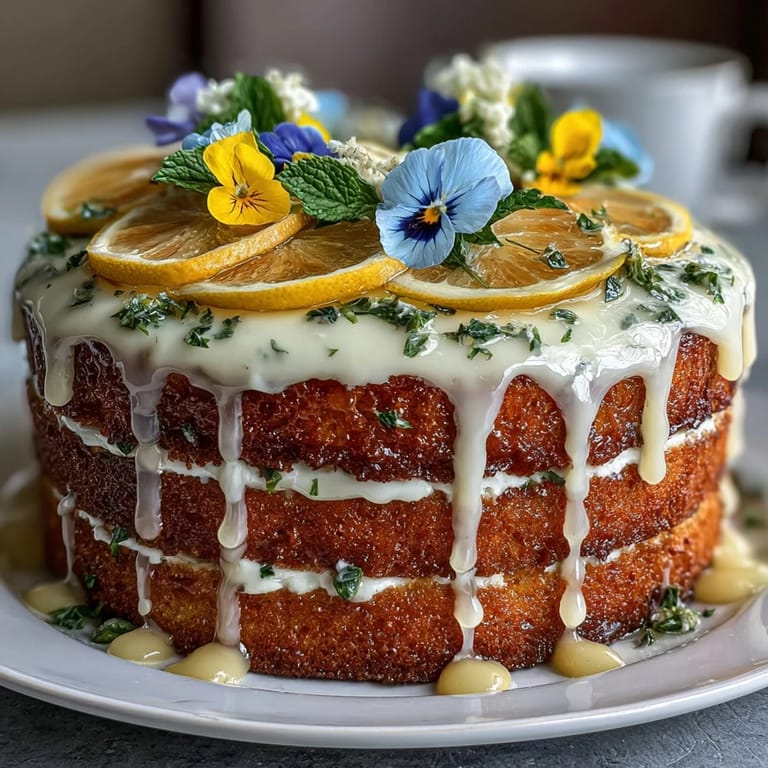
- Scatter your edible flowers across the top and add lemon zest curls if you have them. The cake looks most stunning when the flowers are fresh and the cream is still cloud-like.
 Pin it
 My sister once served this cake at her spring garden party, and I watched people pause mid-conversation just to look at it before eating. There's something about the transparency of a naked cake—seeing all those beautiful layers and colors—that makes dessert feel like an event rather than just something sweet at the end of a meal.
Why This Cake Feels Special
Naked cakes took off a few years ago, but there's a reason beyond Instagram appeal: they're honest. You can see every layer, every color, every decision you made while baking. There's no hiding behind thick frosting, which actually makes this easier to pull off because slight imperfections become part of the charm. The exposed crumb and filling showcase all your work, and the combination of light sponge with that punchy lemon curd creates a flavor contrast that feels celebratory without being heavy.
Lemon Curd Is the Real Star
I didn't understand the power of good lemon curd until I made my first batch from scratch. Store-bought versions exist, sure, but homemade curd has this silky, intense quality that elevates everything around it. The bright acidity cuts through the sweetness of the cake and cream, keeping your palate refreshed bite after bite instead of feeling cloyed by the third forkful. Once you taste the difference, you'll start putting it on everything—in pastries, swirled into yogurt, spread on toast.
Timing and Make-Ahead Strategy
The beauty of this cake is its flexibility with your schedule. Bake the sponge layers a day or two ahead and store them wrapped in plastic at room temperature, which actually lets them firm up slightly and become easier to handle. Make the lemon curd also a day ahead and keep it refrigerated, and whip the cream up to 4 hours before you need it. On the day of serving, you're really just assembling flowers and putting it all together, which takes about 20 minutes and involves far less stress than you'd expect.
- Chill the assembled cake for 30 minutes before serving so the layers set and become easier to slice cleanly.
- If you're transporting this somewhere, assemble it after you arrive rather than trying to move it fully decorated.
- Leftover cake keeps for two days refrigerated, though the whipped cream portion will soften—the flavors only get better as the curd seeps into the crumb.
 Pin it
 This cake doesn't need much more than a cup of tea or a glass of something sparkling alongside it. Once you nail this recipe, it becomes the dessert you reach for whenever you want to feel accomplished without spending all day in the kitchen.
Recipe FAQs
- → What types of edible flowers work best for decoration?
Flowers like pansies, violets, marigolds, and nasturtiums provide vibrant colors and delicate flavors that complement the cake beautifully. Ensure they are pesticide-free and labeled edible.
- → How can I make the lemon curd smooth and thick?
Cook the lemon juice, zest, sugar, and egg yolks gently over simmering water, whisking constantly until thickened. Then whisk in cold butter for a glossy, smooth finish.
- → Can I prepare this cake in advance?
Yes, baking and cooling the layers ahead of time and chilling the lemon curd and whipped cream allows easier assembly and better flavor melding.
- → What can I use instead of whipped cream for richer texture?
Substituting half the whipped cream with mascarpone adds a creamy richness that enhances the cake’s texture and flavor.
- → How should the cake be stored after assembly?
Store the assembled cake in the refrigerator to maintain the freshness of the cream and lemon curd, ideally covered to prevent drying out.
- → Is this cake suitable for vegetarian diets?
Yes, this cake contains no meat products and fits vegetarian dietary preferences, but please note it includes eggs and dairy.