 Pin it
 My neighbor Sofia once scolded me in her kitchen for using pre-grated cheese. She was making Cacio e Pepe, and when I offered to help, she waved a block of Pecorino Romano at me like a conductor's baton. "This is not a difficult recipe," she said in her thick Roman accent, "but you must respect the few ingredients you have." That afternoon, I learned that simplicity demands precision, and that three ingredients could sing louder than a pantry full of spices.
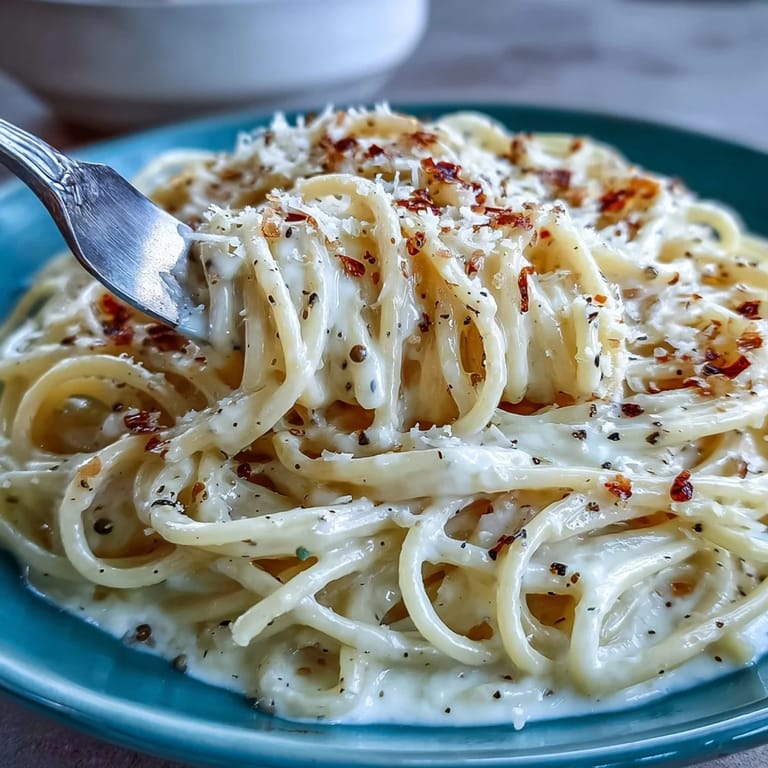
I made this for my brother on a Tuesday night after he'd had a rough day at work. He sat at my counter, quiet and tired, twirling his fork through the glossy strands. Halfway through the bowl, he looked up and said, "This is exactly what I needed." There's something about the warmth of pepper and the sharpness of cheese that feels like a conversation without words, comforting and honest.
Ingredients
- Spaghetti or tonnarelli (400 g): Tonnarelli is the Roman choice, but spaghetti works beautifully and is easier to find; cook it just shy of al dente so it finishes in the skillet, soaking up all that peppery, cheesy goodness.
- Pecorino Romano cheese (120 g, finely grated): This is the soul of the dish, sharp and salty with a bite that pre-grated supermarket cheese simply cannot deliver; grate it fresh and finely, or it will clump instead of melt.
- Whole black peppercorns (2 tsp, freshly cracked): Toasting them in a dry pan wakes up their fragrance and adds a warmth that jarred pepper can't match; crack them coarsely for bursts of flavor in every bite.
- Kosher salt (1 tsp for pasta water): Season the water generously, it's your only chance to flavor the pasta from within, and under-salted pasta will make the whole dish taste flat.
- Unsalted butter (1 tbsp, optional): Traditionalists skip it, but a small knob adds a silky richness that helps the sauce cling; I like to include it on nights when I want a little extra comfort.
Tired of Takeout? 🥡
Get 10 meals you can make faster than delivery arrives. Seriously.
One email. No spam. Unsubscribe anytime.
Instructions
- Boil the pasta:
- Bring a large pot of water to a rolling boil, add salt, and cook the spaghetti until just al dente, about 1 minute less than the package suggests. Before draining, scoop out 1½ cups of that starchy, cloudy pasta water; it's the secret to a silky sauce.
- Toast the pepper:
- While the pasta bubbles away, heat a large dry skillet over medium heat and add the cracked peppercorns, shaking the pan gently for about a minute until they smell warm and toasty. This step is small but mighty, it makes all the difference.
- Build the base:
- Pour 1 cup of the reserved hot pasta water into the skillet with the toasted pepper and reduce the heat to low. Let it simmer gently, coaxing out the pepper's flavor into the water.
- Combine pasta and pepper water:
- Add the drained pasta to the skillet and toss it around, letting it drink in that peppery liquid. The pasta should look glossy and almost creamy even before the cheese arrives.
- Add the cheese:
- Remove the skillet from the heat and sprinkle in the grated Pecorino Romano a handful at a time, tossing and stirring vigorously with tongs. Add splashes of reserved pasta water as needed to loosen the sauce; it should coat the pasta like silk, not clump into a grainy mess.
- Finish with butter:
- If you're using butter, toss it in now and stir until it melts into the sauce, adding a final glossy richness. Serve immediately, because this dish waits for no one.
- Serve and garnish:
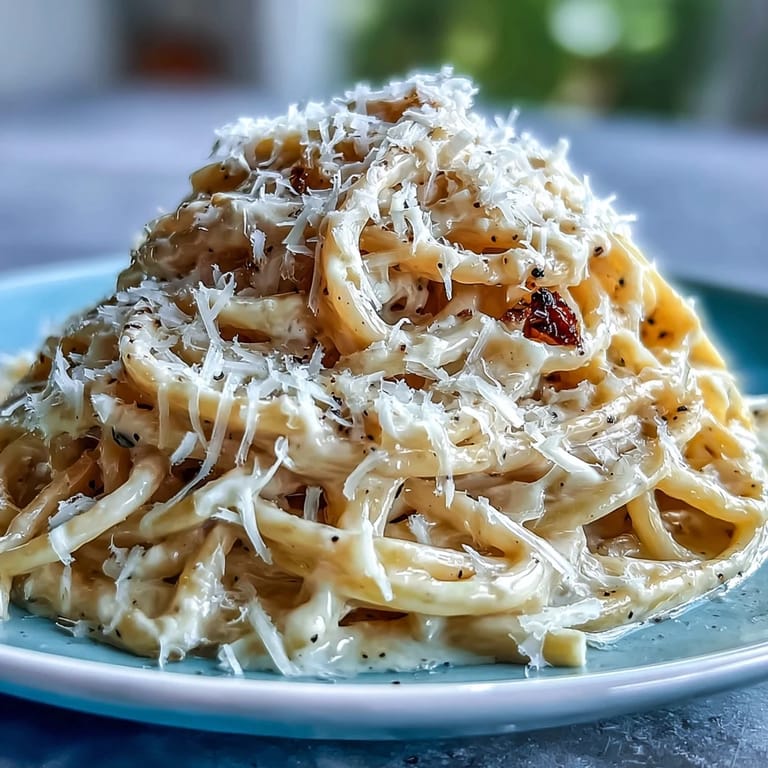
- Twirl the pasta onto warm plates and top with extra grated Pecorino and a generous crack of black pepper. Eat it hot, with good company or a good book.
 Pin it
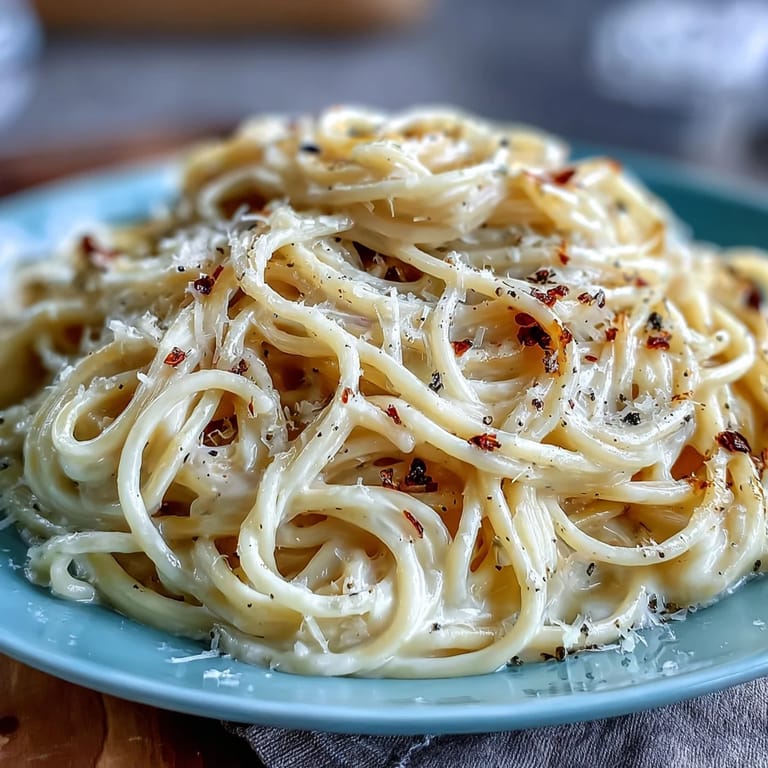
 The first time I got the sauce right, I stood at the stove and actually laughed out loud. It was glossy, creamy, and clung to the pasta like it had been planning this all along. I called my friend Sarah and made her promise to come over the next night so I could make it again, just to prove it wasn't a fluke. Food has a way of making you want to share the moment, not just the meal.
Choosing Your Pasta
Tonnarelli is traditional in Rome, thicker and more toothsome than spaghetti, with a square cross-section that grabs onto the sauce. But spaghetti is more common outside Italy and works just as well; the key is cooking it properly and tossing it with confidence. I've also used bucatini on nights when I wanted a little more chew, and it never disappointed.
Getting the Sauce Just Right
The magic happens when hot pasta water meets cool cheese off the heat, creating an emulsion that's creamy without any cream. If your sauce looks too thick, add pasta water a tablespoon at a time, tossing constantly. If it's too thin, keep tossing over low heat until it tightens up; patience and motion are your friends here.
Serving and Pairing
This dish is best eaten immediately, straight from the skillet if you're feeling casual. I like to serve it in warm bowls with a crisp Italian white wine like Frascati or Vermentino, something light and bright to cut through the richness. A simple arugula salad dressed with lemon on the side is all you need to round out the meal.
- Grate extra Pecorino Romano at the table so everyone can add more to taste.
- Crack fresh pepper over each serving for little bursts of heat and aroma.
- Leftovers can be gently reheated with a splash of water, though they'll never be quite as perfect as the first bite.
 Pin it
 There's a reason this recipe has lasted for generations in Roman kitchens: it's honest, delicious, and asks for nothing more than your attention. Make it once, and you'll understand why Sofia waved that cheese at me like it mattered, because it does.
Recipe FAQs
- → What type of pasta works best for Cacio e Pepe?
Tonnarelli is the traditional choice, but spaghetti works excellently. The key is cooking it al dente so it absorbs the peppery sauce while maintaining texture.
- → Why is freshly grated Pecorino Romano important?
Freshly grated Pecorino Romano melts smoothly into a creamy sauce, while pre-shredded cheese contains anti-caking agents that prevent proper emulsification and create a grainy texture.
- → How do I prevent the cheese from clumping?
Remove the pan from heat before adding cheese, then toss vigorously while gradually adding the Pecorino. Use reserved pasta water to control consistency and ensure smooth emulsification.
- → Can I make Cacio e Pepe ahead of time?
This dish is best served immediately after preparation. The creamy sauce can separate and become grainy when reheated, losing its signature silky texture.
- → What wine pairs well with Cacio e Pepe?
A crisp Italian white wine like Frascati complements the rich, peppery flavors beautifully. Other options include Vermentino or Pinot Grigio.
- → Is butter traditional in Cacio e Pepe?
Traditional Roman Cacio e Pepe uses only pasta, Pecorino Romano, and black pepper. Butter adds extra creaminess but is optional and often omitted by purists.