 Pin it
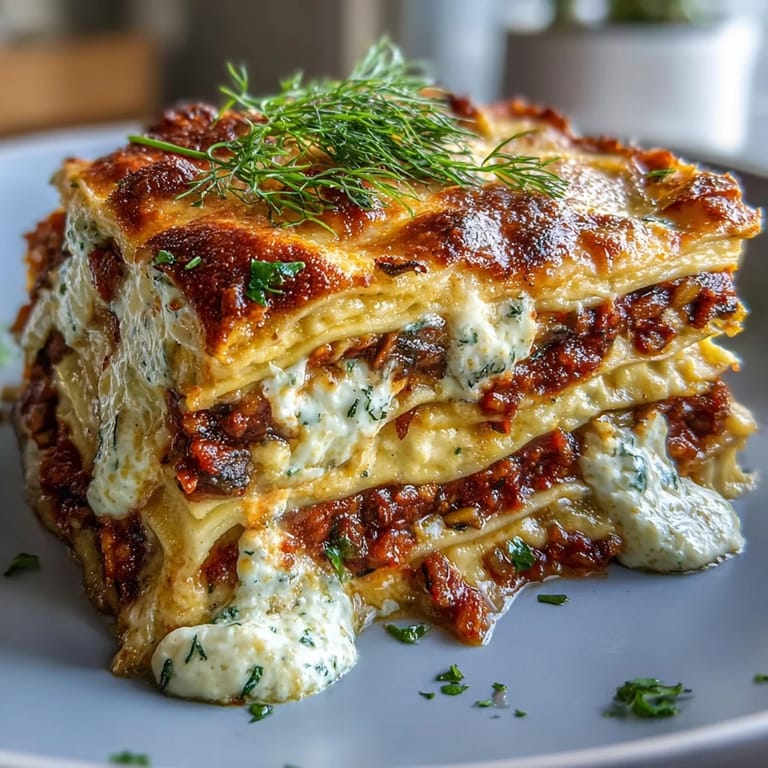
 My partner stood in the kitchen doorway one weeknight, arms crossed, asking what was for dinner. I had no leftovers, a single ovenproof pan, and about an hour before we both collapsed. That's when I stopped overthinking lasagne and just started layering everything into one pan, letting the red lentils do the heavy lifting while the mushrooms and courgettes soaked up all that smoky, savory depth. The result felt like I'd somehow cheated the system, serving restaurant-quality comfort food without the usual stack of dirty dishes.
I made this for my sister's dinner party after she'd mentioned wanting something hearty but not heavy. When she tasted it, she got quiet for a moment, then asked if I'd somehow hidden meat in there. The way the lentils had softened into the sauce, the umami from the mushrooms hitting just right—it genuinely fooled her. That's when I knew this recipe had crossed from quick-weeknight thing into something I could confidently serve to people I wanted to impress.
Ingredients
- Olive oil: Use good quality here since it's going into the base layer where every bit of flavor matters.
- Onion, garlic, carrots, celery, and bell pepper: These form your soffritto foundation, so don't skip the chopping—it takes five minutes and builds everything that comes next.
- Mushrooms: Chop them finely so they almost dissolve into the sauce, adding umami depth that makes people wonder what your secret ingredient is.
- Courgette: Dices into small pieces that soften completely, adding moisture and slight sweetness without being obvious.
- Smoked paprika: This is what makes the whole dish taste less like standard tomato sauce and more like something with actual character.
- Dried oregano and thyme: Classic Italian herbs that ground the dish, though fresh would be lovely if you have them on hand.
- Chili flakes: Optional but worth a small pinch for subtle heat that doesn't announce itself.
- Chopped tomatoes and tomato paste: The tomato paste concentrates the flavor, so don't dilute it with extra liquid.
- Red lentils: They break down slightly during cooking, which is exactly what you want for texture and body.
- Vegetable stock: Use good quality, as it seasons everything else in the pan.
- Balsamic vinegar: Added at the end to brighten the sauce and round out the smokiness.
- No-boil lasagne sheets: A genuine time-saver that won't disappoint if you have enough moisture in your sauce.
- Ricotta, mozzarella, and Parmesan: Layer them gently—ricotta is soft, so dollop rather than spread for cleaner layers.
- Fresh basil: Tear it by hand just before serving so it releases its oils and scent.
Tired of Takeout? 🥡
Get 10 meals you can make faster than delivery arrives. Seriously.
One email. No spam. Unsubscribe anytime.
Instructions
- Warm your pan and build your base:
- Heat oil over medium warmth, add your chopped onion, and let it soften without browning. You'll know it's ready when the edges start to turn translucent and the kitchen smells sweet. Patience here matters because you're creating a foundation that tastes good, not rushing through it.
- Add your aromatics and first vegetables:
- Stir in garlic, carrots, celery, and bell pepper, cooking until the vegetables just start to soften at the edges but still have slight resistance. This usually takes about five minutes, and the sound of the sizzle should calm down a bit, signaling that the water content is releasing.
- Introduce the mushrooms and courgette:
- These release moisture, so keep the heat steady and let them cook down for five or six minutes until most of that liquid has evaporated. You'll smell a deeper, earthier aroma as the mushrooms caramelize slightly.
- Bloom your spices:
- Sprinkle in the smoked paprika, oregano, thyme, and chili flakes, stirring constantly for about one minute until the spices are fragrant but not burned. The smell will shift to something warm and toasted, and that's your signal to move forward.
- Build your sauce:
- Pour in the chopped tomatoes, stir through the tomato paste, scatter in the rinsed lentils, and add your vegetable stock. Season generously with salt and pepper, then bring everything to a gentle simmer.
- Let the lentils soften:
- Cover the pan and let it bubble quietly for twenty to twenty-five minutes. The lentils will soften and slightly break down, thickening the sauce while staying saucy enough for layering. Stir it a couple of times and taste as you go.
- Finish the bolognese:
- Stir in the balsamic vinegar, which rounds out all the flavors and adds a subtle sweetness that balances the smoke and herbs. Taste again and adjust seasoning if needed.
- Prepare to layer:
- While your sauce finishes, preheat the oven to 180°C. Remove half of the bolognese from the pan and set it aside—you'll use this for the middle and top layers.
- Start your first layer:
- Arrange lasagne sheets directly over the bolognese still in the pan, breaking them to fit if needed. Don't worry about perfection; they'll soften and settle as everything bakes.
- Add your first cheese layer:
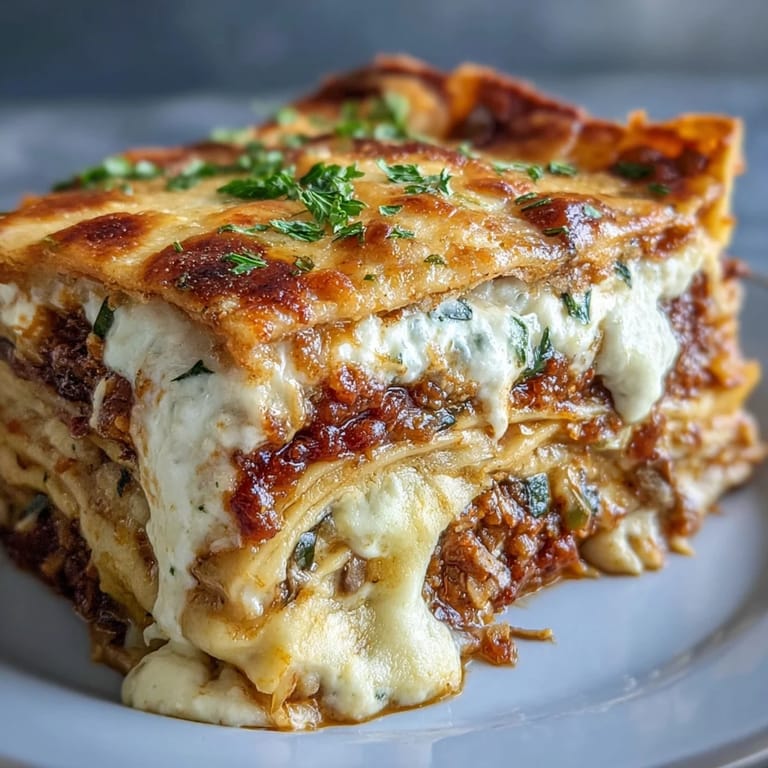
- Dollop half of your ricotta over the sheets, then sprinkle a third of the mozzarella and Parmesan over that. The cheese doesn't need to cover completely because it'll melt and spread.
- Continue building:
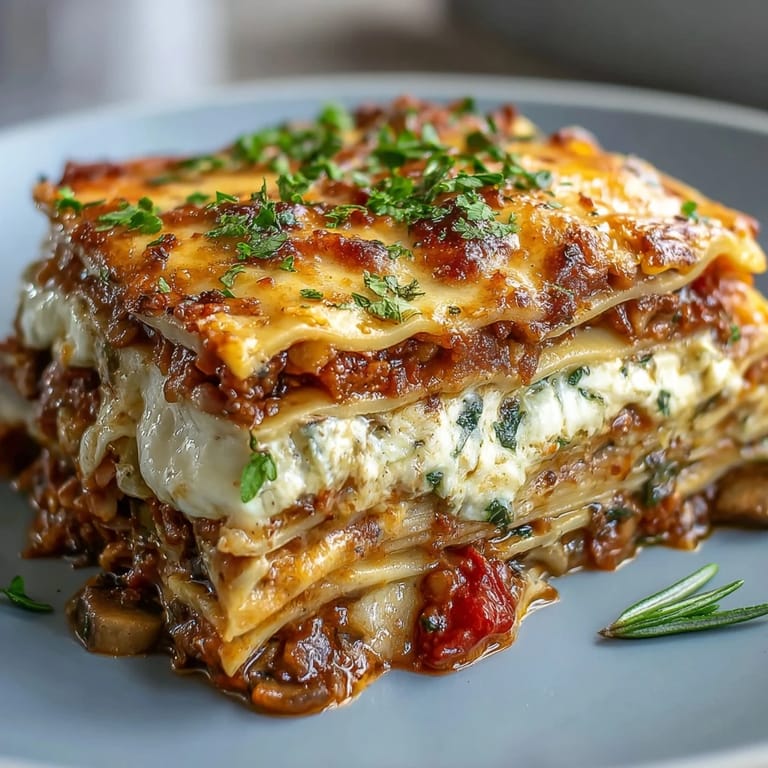
- Spread half of your reserved bolognese over the cheese, then layer more lasagne sheets on top. Repeat the ricotta, mozzarella, and Parmesan, then finish with the final bolognese.
- Top and seal:
- Arrange your final layer of lasagne sheets on top, then sprinkle the remaining mozzarella and Parmesan over everything. Cover the pan tightly with foil.
- Bake covered:
- Bake for twenty-five minutes under foil so the lasagne can soften and the cheese can start melting without the top drying out. You shouldn't hear much sizzling, just quiet baking.
- Finish and brown:
- Remove the foil and bake for another ten to fifteen minutes until the top is golden and you can see sauce bubbling at the edges. The cheese should look slightly browned and irresistible.
- Rest before serving:
- Let the pan sit for ten minutes out of the oven before you cut into it, allowing everything to set slightly so your layers hold together. Garnish with torn fresh basil just before plating.
 Pin it
 There's something quiet and satisfying about watching someone reach for seconds of something you've made in a single pan. It feels like you've outsmarted the system without sacrificing anything. This lasagne has become the thing I make when I want to feel capable and generous without spending the evening washing up.
The Secret of Smoked Paprika
The first time I made this, I used regular paprika out of habit and the dish tasted fine, pleasant even, but forgettable. The second time, I grabbed the smoked variety and suddenly everything shifted. The vegetable sauce developed this depth that made people lean in and ask what I'd added, and the honest answer was just one small spice swap. Smoked paprika works because it mimics the caramelized, almost charred complexity you get from slow-cooked meat dishes, which is exactly what a vegetarian lasagne needs to feel substantial. It's worth buying a fresh tin rather than using one that's been sitting in your cupboard for two years.
Why Red Lentils Work Better Than You Think
Red lentils are underrated in pasta sauces because people assume they'll turn mushy, which they will, but that's actually the point here. As they cook down, they partially dissolve into the sauce, creating a creamy thickness that makes the whole dish feel richer without needing cream or meat. They also add genuine protein and fiber, so this becomes a complete meal rather than a vegetable side dressed up as dinner. The way they soften into the bolognese means you're not eating distinct lentils—instead they become part of the sauce itself, adding body and substance that the tomatoes alone can't provide.
Layering for Success and Structural Integrity
The temptation with lasagne is to layer it like you're stacking building blocks, but this recipe works better if you think of layering as creating pockets and distribution. By removing half the bolognese before you start, you ensure the bottom layer doesn't become a dense, stodgy base that never gets properly cooked through. The sauce that stays in the pan keeps the first lasagne sheets moist and flavorful, while the reserved sauce in the middle layers stays more integrated. This might sound overthought, but the difference between a lasagne that slices cleanly and one that falls apart on the plate comes down to this one step.
- Always break lasagne sheets to fit your pan rather than folding them, which creates thick, doughy edges.
- If you have gaps between sheets, small bits of sauce will fill them and create natural glue between layers.
- The final layer of sheets with just cheese and no sauce underneath gets crispy edges while baking, which adds textural contrast.
 Pin it
 This lasagne sits somewhere between weeknight practicality and genuine comfort, which is exactly where the best food lives. Make it once and it becomes the thing you return to when you want to feed people properly without the usual fuss.
Recipe FAQs
- → Can I make this lasagne ahead of time?
Yes, you can assemble the lasagne completely, cover tightly with foil, and refrigerate for up to 24 hours before baking. Add 10-15 minutes to the covered baking time if baking straight from the fridge.
- → What can I substitute for red lentils?
Brown or green lentils work well, though they require a longer cooking time (about 35-40 minutes). You can also use cooked brown lentils and reduce the vegetable stock by half.
- → How do I make this vegan?
Replace the ricotta, mozzarella, and Parmesan with plant-based cheese alternatives. Many store-bought vegan cheeses melt beautifully and provide similar texture and flavor.
- → Can I use fresh lasagne sheets instead of no-boil?
Yes, fresh lasagne sheets work wonderfully. They may cook slightly faster, so check the lasagne after 20 minutes of covered baking to avoid overcooking.
- → What size pan works best for this dish?
A large ovenproof skillet or sauté pan with at least 28-30 cm (11-12 inch) diameter and high sides works best to accommodate all the layers comfortably.
- → How should I store leftovers?
Store covered in the refrigerator for up to 4 days. Reheat individual portions in the microwave or the entire pan covered with foil in a 160°C oven for 20-25 minutes until heated through.