 Pin it
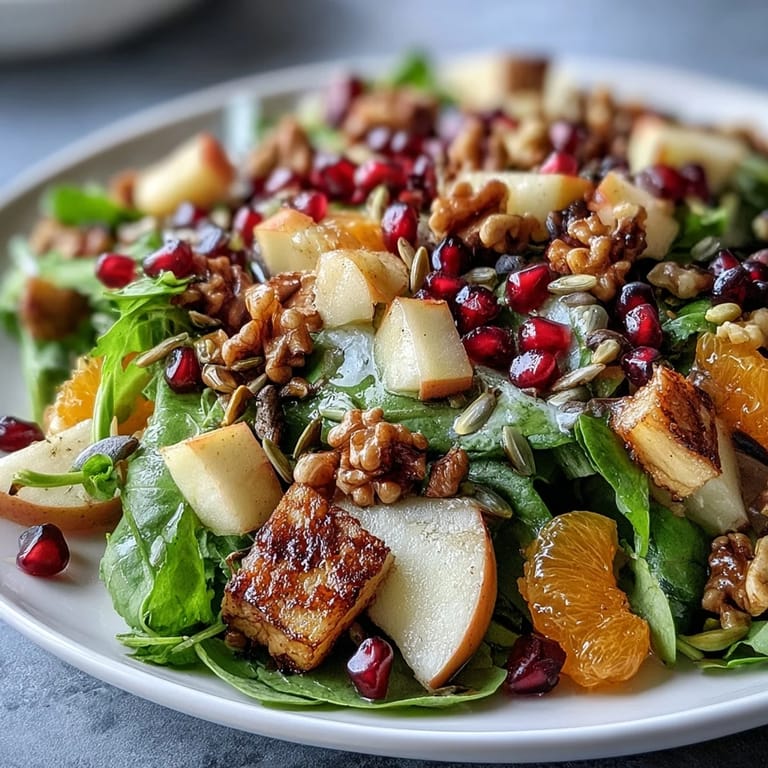
 One December morning, my kitchen smelled like citrus and earth after I'd cracked open a pomegranate to find those jewel-like seeds practically glowing in the winter light. I was supposed to make something warming, something cooked, but instead I found myself reaching for walnuts and the last of the crisp apples from the counter. That spontaneous moment turned into this salad—a dish that proved you don't need heat to feel nourished when the right ingredients come together with intention.
I made this for a friend who was recovering from an intense week, and watching her expression shift from exhaustion to genuine delight as she tasted it reminded me why simple, real food matters so much. She asked for the recipe before she'd finished her bowl, which felt like the highest compliment.
Ingredients
- Pomegranate, 1 large: Those seeds are packed with antioxidants, and honestly, the satisfying pop of each one is half the appeal of this salad.
- Orange, 1 large: Freshly segmented orange adds natural sweetness and brightness that plays beautifully against the earthiness of the walnuts.
- Apple, 1 crisp: Dice it just before serving so it stays crunchy and doesn't oxidize into mushiness.
- Pear, 1 ripe: The key word is ripe, not mushy—it should yield gently to pressure but still hold its shape.
- Walnuts, 1/2 cup roughly chopped: I learned the hard way that toasting them first transforms the entire salad into something restaurant-quality.
- Pumpkin seeds, 2 tbsp: These add both crunch and a subtle nuttiness that keeps things interesting with every forkful.
- Sunflower seeds, 2 tbsp: A lighter counterpoint to the walnuts, giving you variety in texture without overwhelming the palate.
- Extra-virgin olive oil, 2 tbsp: Use one you actually enjoy tasting, because it matters here more than anywhere else.
- Lemon juice, 1 tbsp freshly squeezed: Bottled juice won't give you that bright, living quality that makes this dressing sing.
- Honey or maple syrup, 1 tsp: Just enough sweetness to bridge the gap between tart and savory without tipping into dessert territory.
- Ground cinnamon, 1/4 tsp: A whisper of warmth that hints at something deeper without making itself known.
- Sea salt, pinch: This is your volume control—adjust to taste because salt is personal.
- Fresh mint, 2 tbsp chopped (optional): Optional only if you're in a hurry, but truly transformative if you take the extra minute.
Tired of Takeout? 🥡
Get 10 meals you can make faster than delivery arrives. Seriously.
One email. No spam. Unsubscribe anytime.
Instructions
- Gather your fruit first:
- Arrange your pomegranate, orange, apple, and pear on your cutting board like you're taking inventory before an adventure. Peel and segment the orange over a bowl to catch any juice—that liquid gold will add subtle flavor to everything.
- Build the foundation:
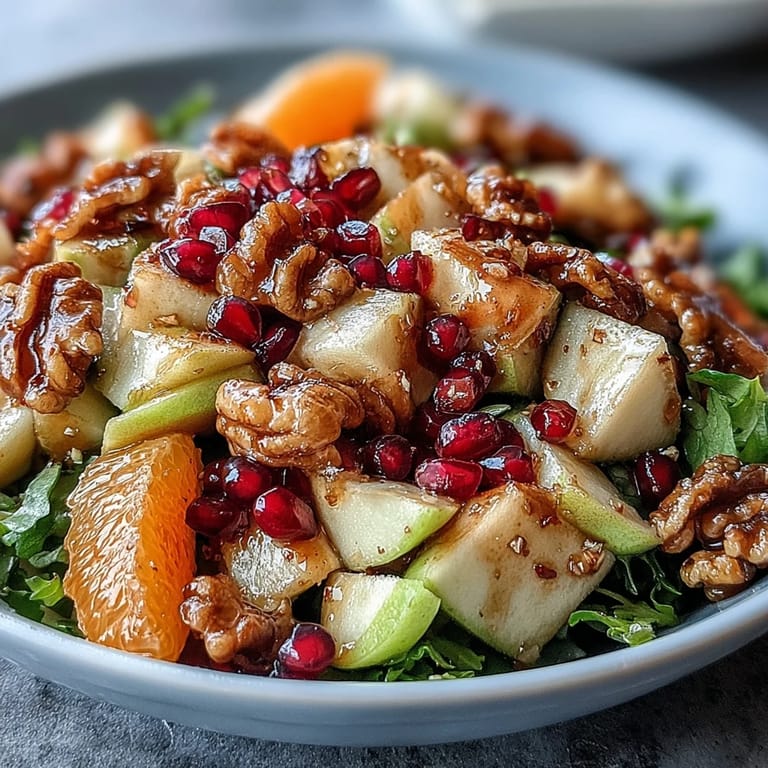
- Combine all the fruit in your large salad bowl, letting the pomegranate seeds nestle in first so they don't roll away. The colors alone should make you smile before you've even tasted anything.
- Add your crunch:
- Scatter the chopped walnuts and seeds across the top, distributing them evenly so no spoonful will lack for texture. If you have time, toast these first in a dry pan until fragrant—it changes everything.
- Whisk the dressing with care:
- In a small bowl, combine olive oil, lemon juice, honey, cinnamon, and salt, whisking until the mixture looks glossy and unified. Taste it alone before adding to the salad—it should make your mouth water slightly.
- Bring everything together gently:
- Drizzle the dressing over the salad and toss with a light hand, as if you're tucking everything into place rather than scrambling it. You want to coat every ingredient without bruising the delicate fruit.
- Add the final flourish:
- Tear the mint leaves by hand and scatter them across the top just before serving—this preserves their oils and keeps them tasting fresh. Serve immediately so everything maintains its textural integrity.
 Pin it
 There's something almost meditative about how this salad brings color and life to a gray winter table, transforming what could have been an ordinary lunch into a small act of self-care. My friend still texts me photos of it whenever she makes it, which says everything about how food can become a touchstone between people.
The Toasting Question
I used to skip toasting the nuts and seeds entirely, thinking it was an unnecessary step, until one afternoon I decided to try it just to see. The difference was so dramatic that I've never skipped it again—the warmth coaxes out flavors that lie dormant in raw versions, making the entire salad feel more intentional and complex. A dry skillet over medium heat for just three to five minutes is all you need, stirring occasionally until you smell that deep, almost caramel-like nuttiness rising up.
Fruit Swaps and Seasonality
This salad is forgiving enough to shift with what's available and what your body is craving. In late fall I sometimes use persimmons instead of pears, and in early spring I've substituted kiwi for the apple when pomegranates are past their prime. The dressing stays the same, anchoring everything while the fruit changes the emotional tone of the dish—that flexibility is part of why it never gets boring even when I make it frequently.
Pairing and Serving
Serve this alongside something creamy or savory to round out the meal—it works beautifully next to a tangy yogurt, soft cheese, or grain bowl. The salad itself is light and refreshing, perfect for days when you want something nourishing but not heavy, and it pairs wonderfully with sparkling water infused with citrus or a dry white wine if you're in the mood for something celebratory.
- Chill your bowls in the freezer for five minutes before serving to keep everything crisp and cold longer.
- If you're making this for a crowd, hold the dressing separately and let people dress their own portions so they can control the amount.
- Leftover undressed fruit keeps beautifully for a day, so you can save time by prepping everything and finishing assembly just before eating.
 Pin it
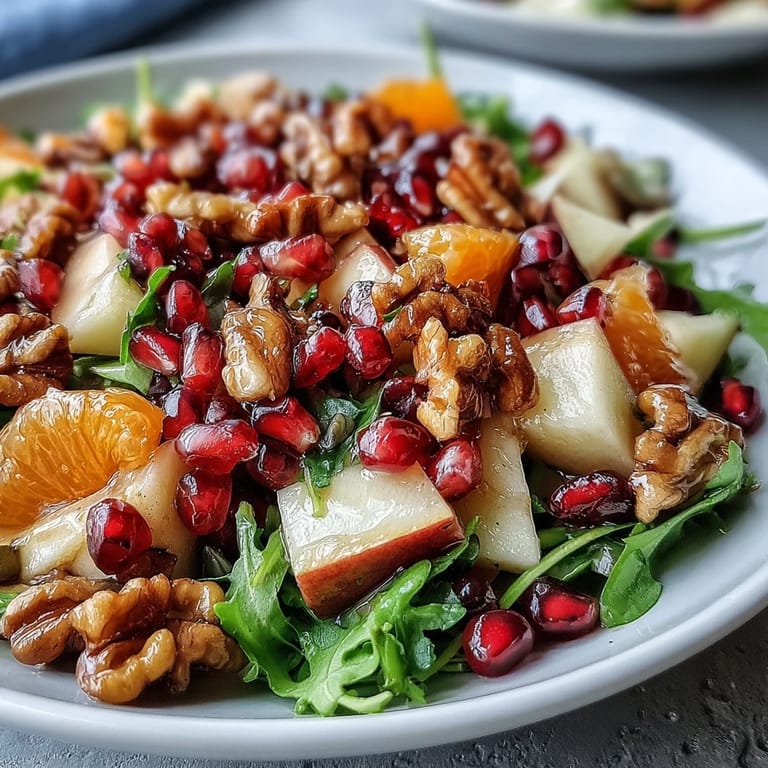
 This salad has become my answer to the question of how to nourish yourself without overthinking it, a dish that respects your time while refusing to compromise on flavor or nutrition. Make it when you need to remember that simple is often the most satisfying.
Recipe FAQs
- → How do I easily remove pomegranate seeds?
Score the pomegranate around the middle, then pull it apart into halves. Hold each half cut-side down over a bowl and tap the back firmly with a wooden spoon. The seeds will fall out while the white membrane stays intact.
- → Can I make this ahead of time?
You can prepare all ingredients up to 4 hours in advance and store them separately. Toss everything with the dressing just before serving to maintain the crisp texture of the fruits and nuts.
- → What other fruits work well in this salad?
Persimmons add lovely sweetness when in season, while kiwi brings a tart contrast. Figs, grapes, or even segmented blood oranges can replace or complement the existing fruits depending on what's available.
- → How should I store leftovers?
Keep any leftover salad in an airtight container in the refrigerator for up to 2 days. The nuts may lose some crunch, but the flavors will continue to meld together beautifully.
- → Is there a nut-free alternative?
Replace walnuts with pumpkin and sunflower seeds only, or try toasted coconut flakes for crunch. For additional protein without nuts, consider adding hemp hearts or chopped roasted chickpeas.